Out-of-body experiences are relatively common in shamanic and yogic cultures; in many cases practitioners receive instruction from teachers in dreams, which then translates into the reality of the waking world as well. From a Tibetan perspective, a single transmission of knowledge within a dream can represent a lifetime's achievement. In our own culture, Einstein's thought-experiments represent a direct experiential method of visualization, which has resulted in many aspects of modern science, such as the theory of relativity and quantum physics. It could be assumed that if the greatest scientists of the West used hypnosis, as well as shamanic and yogic methods of subtle body activation, greater discoveries than Einstein’s would be readily available. Similarly, tai chi, which is a direct means of enhancing the body's energy and health, and is practiced by millions of people globally, is said to be based on a dream of its founder, Zhang San Feng.
Fundamentally, the shaman uses an altered state of consciousness to travel outside of the body to affect the physical world. It is important to remember that the shaman does not act for his or her own benefit but for the tribe or the nation. Their journeying, as terrifying and even painful as it can be, is done for the healing of others.
About Me
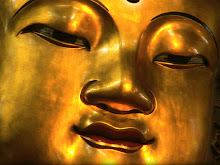
- KTBMovie
- "Lost Secret of Immortality" For thousands of years, science and religion have searched for the key to enlightenment. Killing the Buddha uncovers the sacred knowledge of the Philosopher’s Stone and guides viewers to the mysterious Kundalini – the original enlightened energy of the body. Filmed in China and Tibet, this revolutionary film reveals the secret of practicing sexual yoga to achieve tantric enlightenment. Visit www.killingthebuddhamovie.com for more information about the motion comic and movie.
Friday, July 30, 2010

Thursday, July 29, 2010
Lucid Dreaming: Part 2
Although Nobel prize-winning scientists often describe their creative leap as a fundamental dream-like insight, the fear of mysticism, which pervades science, prevents the true integration of unconscious levels of reality with the physical world. Similarly, science is based upon theoretical or mathematical descriptions of reality, which can be used for technological gain, whereas real meditation or dream practice results in the direct experience of the truth body at the completion stage.
In many shamanic cultures, the waking state is considered to be an illusion and the inner dimensions are considered to be real. These states can be accessed through dreams, or visions using hallucinogenic plants.
Indeed, in many shamanic cultures, a shaman is chosen by the spirits. It is not taken on as a job title or a vocational skill or even a career. Often the future shaman is felled by a mysterious disease and lies in a deep coma-like state for some time, being refashioned and restructured internally. When he or she awakes they have the option to go into deeper training, both with an older shaman and in the dreamworld.
Unfortunately, the majority of modern scientific interpretations have described luminous or visionary phenomenon as symptoms of a malfunctioning brain, schizophrenia or temporal lobe epilepsy. From a shamanic viewpoint, the well-being of both the individual and the tribe is largely determined by skill in dreaming. The Tibetan emphasis on lucid dreaming as a means of understanding the nature of reality is a remarkable example of a shamanic culture that unites yogic and alchemical theories into an organized cultural framework.
In many of these cultures, skill in dreaming results from a greater activation of the original energy of the body, using a variety of techniques, which range from breathing exercises to sensory deprivation. Many of the Himalayan lineages, which result in Nirvana Without Remainder, emphasize using extended periods of darkness to unlock the original energy of the body. Taoism also has the tradition of extended periods of meditation deep within caves. It is believed that by immersing oneself in the extreme yin environment of the dark cave the practitioner is better able to communicate with the world of dreams and visions. The chief characteristic of the dark retreat is that the dreams of the individual become the only reality that the practitioner can observe consciously. Many of the greatest adepts have actually spent years in total darkness; although this is an extreme model, it demonstrates the importance of the integration of the world of dreaming with the conscious mind.
In many shamanic cultures, the waking state is considered to be an illusion and the inner dimensions are considered to be real. These states can be accessed through dreams, or visions using hallucinogenic plants.
Indeed, in many shamanic cultures, a shaman is chosen by the spirits. It is not taken on as a job title or a vocational skill or even a career. Often the future shaman is felled by a mysterious disease and lies in a deep coma-like state for some time, being refashioned and restructured internally. When he or she awakes they have the option to go into deeper training, both with an older shaman and in the dreamworld.
Unfortunately, the majority of modern scientific interpretations have described luminous or visionary phenomenon as symptoms of a malfunctioning brain, schizophrenia or temporal lobe epilepsy. From a shamanic viewpoint, the well-being of both the individual and the tribe is largely determined by skill in dreaming. The Tibetan emphasis on lucid dreaming as a means of understanding the nature of reality is a remarkable example of a shamanic culture that unites yogic and alchemical theories into an organized cultural framework.
In many of these cultures, skill in dreaming results from a greater activation of the original energy of the body, using a variety of techniques, which range from breathing exercises to sensory deprivation. Many of the Himalayan lineages, which result in Nirvana Without Remainder, emphasize using extended periods of darkness to unlock the original energy of the body. Taoism also has the tradition of extended periods of meditation deep within caves. It is believed that by immersing oneself in the extreme yin environment of the dark cave the practitioner is better able to communicate with the world of dreams and visions. The chief characteristic of the dark retreat is that the dreams of the individual become the only reality that the practitioner can observe consciously. Many of the greatest adepts have actually spent years in total darkness; although this is an extreme model, it demonstrates the importance of the integration of the world of dreaming with the conscious mind.
Tuesday, July 27, 2010
Lucid Dreaming: Part 1
The art of dreaming represents a fundamental difference between the modern scientific understanding of dreams and the hunter-gatherer archaic description of reality. In the latter it is believed that dreams can be consciously controlled and used to enhance the well-being of the practitioner and the tribe. Dreams are an important source of information, which is independent of the sequential time framework of consensus reality. The shamanic belief is that dreams are actually the source of waking consciousness, and that one dream can completely alter the entire life of an individual. Even in the Western experience, many creative and scientific discoveries have originated from the world of dreams.
Reality can be divided into waking, dreaming and sleeping states. The concept of meditation is that these three levels can be permanently unified by the breathing pattern at the deepest level of sleep, which is when the physical body is the most rejuvenated by the pre-birth energy system.
Buddhism has a very strong component of dream work, as in the following description of dream yoga:
The Middle Way view provides the philosophical framework of the contemplative practice of dream yoga. In a nonlucid dream—in which there is no recognition that one is dreaming—all objective phenomena seem to exist by and of themselves. They, like one’s own personal self in a dream, seem to be real. But upon awakening, one recognizes that neither one’s own mind nor any person or situation encountered in the dream had any such independent existence. This is equally true during the waking state, and in the daytime practice of dream yoga one maintains this awareness as constantly as possible. Everything experienced throughout the day—contrary to appearances—arises in relation to one’s perceptions and conceptions. Every person encountered is perceived in relation to one’s own sensory and conceptual faculties. Never does one encounter the radically and absolutely “other,” for apprehension of the other is always dependent upon one’s own subjective perspective. Thus, upon fathoming the emptiness of inherent existence of all waking phenomena, one maintains throughout the day a sense of the dreamlike quality of all events, recognizing the profoundly intersubjective nature of all relationships with other beings and the environment.
- B. Alan Wallace, Contemplative Science
In shamanic cultures, it is believed that dreaming presents an opportunity to avoid misfortune in waking life, if fears and obstacles are successfully confronted and transcended in the dreamworld. Even though many scientists solve significant theoretical problems using dream information, our culture has only just begun to understand and investigate the potential of dream practices, including lucid dreaming, to enhance creative problem solving. Artists and poets and writers are clearly dependent upon dream information from the unconscious, yet very few scientists are using hypnosis or self-suggestion to achieve greater clarity in dreams.
Reality can be divided into waking, dreaming and sleeping states. The concept of meditation is that these three levels can be permanently unified by the breathing pattern at the deepest level of sleep, which is when the physical body is the most rejuvenated by the pre-birth energy system.
Buddhism has a very strong component of dream work, as in the following description of dream yoga:
The Middle Way view provides the philosophical framework of the contemplative practice of dream yoga. In a nonlucid dream—in which there is no recognition that one is dreaming—all objective phenomena seem to exist by and of themselves. They, like one’s own personal self in a dream, seem to be real. But upon awakening, one recognizes that neither one’s own mind nor any person or situation encountered in the dream had any such independent existence. This is equally true during the waking state, and in the daytime practice of dream yoga one maintains this awareness as constantly as possible. Everything experienced throughout the day—contrary to appearances—arises in relation to one’s perceptions and conceptions. Every person encountered is perceived in relation to one’s own sensory and conceptual faculties. Never does one encounter the radically and absolutely “other,” for apprehension of the other is always dependent upon one’s own subjective perspective. Thus, upon fathoming the emptiness of inherent existence of all waking phenomena, one maintains throughout the day a sense of the dreamlike quality of all events, recognizing the profoundly intersubjective nature of all relationships with other beings and the environment.
- B. Alan Wallace, Contemplative Science
In shamanic cultures, it is believed that dreaming presents an opportunity to avoid misfortune in waking life, if fears and obstacles are successfully confronted and transcended in the dreamworld. Even though many scientists solve significant theoretical problems using dream information, our culture has only just begun to understand and investigate the potential of dream practices, including lucid dreaming, to enhance creative problem solving. Artists and poets and writers are clearly dependent upon dream information from the unconscious, yet very few scientists are using hypnosis or self-suggestion to achieve greater clarity in dreams.
Monday, July 26, 2010
The Eight Yoga of Naropa: Sexual Yoga with a Consort
There is a saying in the mahamudra system of meditation, based on the Six Yogas of Naropa, which goes, "There can be no mahamudra or nirvana without karmamudra or sexual yoga.” According to Himalayan meditation theory, sexual yoga is the central completion stage practice that results in nirvana, or the union of the Three Bodies. Both the Chinese and Tibetan civilizations have been heavily influenced by individuals who achieved whole-brain activation through the use of sexual yoga practices. These individuals include the Yellow Emperor, Lao Tzu, and Padmasambhava. Padmasambhava studied with Sri Simha on Wu Tai Shan in China, as well as with Indian masters.
According to the great historian of religion, Mircea Eliade, tantric theory was originally described in India as the “Chinese method.” Thomas Cleary felt that the descriptions of Padmasambhava practicing sexual yoga for longevity in caves throughout scholars have ignored the emphasis on sexual yoga as the completion stage of meditation in Himalayan yoga lineages. Jung pointed out that the majority of Asian and hermetic art points to the union of opposites, resulting in non-duality. He called this "the actualization of the self after the conscious and unconscious minds have united." However, he had no idea that the goal of sexual yoga is to activate the kundalini through the union of gross, subtle, and void levels of consciousness. This is the basis of both Western alchemy and Eastern medical science. Chinese Internal Alchemy is based on the idea that the lifespan of an individual can be greatly extended through the successful practice of sexual yoga.
As Joseph Campbell tells us:
In the Buddhists lamaseries of Tibet...the holy images and banners show the various Buddhas and Bodhisattvas joined with their Shaktis in embrace, in the yogic posture known as Yab-Yum, "Father-Mother." And the great prayer of the old prayer wheels of Tibet, OM mani padme HUM, "the jewel (mani) in the lotus (padme)," signifies, on one level: the immanence of nirvana (the jewel) in (samsara the lotus); another: the arrival of the mind (the jewel) in nirvana (the lotus); but also, as in the icon of the male and female joined: the lingam in the yoni. “Buddhatvam yosidyonisamsritam,” states a late Buddhist aphorism: "Buddhahood abides in the female organ."
Joseph Campbell, Oriental Mythology: The Masks of God
According to the great historian of religion, Mircea Eliade, tantric theory was originally described in India as the “Chinese method.” Thomas Cleary felt that the descriptions of Padmasambhava practicing sexual yoga for longevity in caves throughout scholars have ignored the emphasis on sexual yoga as the completion stage of meditation in Himalayan yoga lineages. Jung pointed out that the majority of Asian and hermetic art points to the union of opposites, resulting in non-duality. He called this "the actualization of the self after the conscious and unconscious minds have united." However, he had no idea that the goal of sexual yoga is to activate the kundalini through the union of gross, subtle, and void levels of consciousness. This is the basis of both Western alchemy and Eastern medical science. Chinese Internal Alchemy is based on the idea that the lifespan of an individual can be greatly extended through the successful practice of sexual yoga.
As Joseph Campbell tells us:
In the Buddhists lamaseries of Tibet...the holy images and banners show the various Buddhas and Bodhisattvas joined with their Shaktis in embrace, in the yogic posture known as Yab-Yum, "Father-Mother." And the great prayer of the old prayer wheels of Tibet, OM mani padme HUM, "the jewel (mani) in the lotus (padme)," signifies, on one level: the immanence of nirvana (the jewel) in (samsara the lotus); another: the arrival of the mind (the jewel) in nirvana (the lotus); but also, as in the icon of the male and female joined: the lingam in the yoni. “Buddhatvam yosidyonisamsritam,” states a late Buddhist aphorism: "Buddhahood abides in the female organ."
Joseph Campbell, Oriental Mythology: The Masks of God
Friday, July 23, 2010
The Seventh Yoga of Naropa: Forceful Entry (Switching Bodies)
The forceful entry is a legendary yoga that is said to have been lost in its complete form in Tibet, although Indian yogis claim to have preserved the tradition. Like many of the yogas, there are two or three versions. The art of hypnosis, for example, is described in medieval India not as suggestion but as forcefully entering another's body and controlling them. The most important idea of forceful entry is that it is possible for an adept to switch his consciousness from one body to another without dying and without discontinuity of consciousness. The idea would be that the yogi who possesses this skill is able to transfer his consciousness from an aged body to that of another body. In China it was believed that it was possible to transfer consciousness into the child of a wealthy family, resulting in enhanced material benefits. There is a recurrent legend in China that Taoists who have been traveling out of body have returned to find their physical body cremated and thus were forced to enter the body of a recently deceased individual in the area in order to maintain an earthly existence. This is the basis of one of the stories from China of the Eight immortals (eight Taoist masters of ancient times).
One of the most beloved figures of the Eight Immortals is Ti Kuai Li or Iron Crutch Li. He is usually shown with a crutch and a gourd that contains medicinal herbs; he is associated with medicine and healers. He is known as an irascible and unpredictable figure and, since he has the form of a beggar, is known to fight for the rights of the poor and needy.
He was not always a crippled beggar. One time when he had left his body to go to the mountains to do his spiritual cultivation (some say with Lao Tzu himself), he gave precise instructions to one of his students that if he was not back in seven days to burn his body. Unfortunately, while he was away his student got news that his mother was very ill and on death’s door. Even though it had only been six days that his master had been gone his student decided that he had waited long enough; he burned his master’s body and then took off for his home village to visit his ailing mother. So when the master returned after being gone for seven days he found that his body was now a heap of ashes. Desperate, he was forced to enter the body of dead beggar he found at the side of the road, who had a crippled leg. From then on he inhabited this unfortunate body, hence his often terrible temper.
The idea of being trapped without a body, or consciousness traveling from body to body, is relatively common in yogic alchemical literature.
One of the most beloved figures of the Eight Immortals is Ti Kuai Li or Iron Crutch Li. He is usually shown with a crutch and a gourd that contains medicinal herbs; he is associated with medicine and healers. He is known as an irascible and unpredictable figure and, since he has the form of a beggar, is known to fight for the rights of the poor and needy.
He was not always a crippled beggar. One time when he had left his body to go to the mountains to do his spiritual cultivation (some say with Lao Tzu himself), he gave precise instructions to one of his students that if he was not back in seven days to burn his body. Unfortunately, while he was away his student got news that his mother was very ill and on death’s door. Even though it had only been six days that his master had been gone his student decided that he had waited long enough; he burned his master’s body and then took off for his home village to visit his ailing mother. So when the master returned after being gone for seven days he found that his body was now a heap of ashes. Desperate, he was forced to enter the body of dead beggar he found at the side of the road, who had a crippled leg. From then on he inhabited this unfortunate body, hence his often terrible temper.
The idea of being trapped without a body, or consciousness traveling from body to body, is relatively common in yogic alchemical literature.
Subscribe to:
Posts (Atom)