The forceful entry is a legendary yoga that is said to have been lost in its complete form in Tibet, although Indian yogis claim to have preserved the tradition. Like many of the yogas, there are two or three versions. The art of hypnosis, for example, is described in medieval India not as suggestion but as forcefully entering another's body and controlling them. The most important idea of forceful entry is that it is possible for an adept to switch his consciousness from one body to another without dying and without discontinuity of consciousness. The idea would be that the yogi who possesses this skill is able to transfer his consciousness from an aged body to that of another body. In China it was believed that it was possible to transfer consciousness into the child of a wealthy family, resulting in enhanced material benefits. There is a recurrent legend in China that Taoists who have been traveling out of body have returned to find their physical body cremated and thus were forced to enter the body of a recently deceased individual in the area in order to maintain an earthly existence. This is the basis of one of the stories from China of the Eight immortals (eight Taoist masters of ancient times).
One of the most beloved figures of the Eight Immortals is Ti Kuai Li or Iron Crutch Li. He is usually shown with a crutch and a gourd that contains medicinal herbs; he is associated with medicine and healers. He is known as an irascible and unpredictable figure and, since he has the form of a beggar, is known to fight for the rights of the poor and needy.
He was not always a crippled beggar. One time when he had left his body to go to the mountains to do his spiritual cultivation (some say with Lao Tzu himself), he gave precise instructions to one of his students that if he was not back in seven days to burn his body. Unfortunately, while he was away his student got news that his mother was very ill and on death’s door. Even though it had only been six days that his master had been gone his student decided that he had waited long enough; he burned his master’s body and then took off for his home village to visit his ailing mother. So when the master returned after being gone for seven days he found that his body was now a heap of ashes. Desperate, he was forced to enter the body of dead beggar he found at the side of the road, who had a crippled leg. From then on he inhabited this unfortunate body, hence his often terrible temper.
The idea of being trapped without a body, or consciousness traveling from body to body, is relatively common in yogic alchemical literature.
About Me
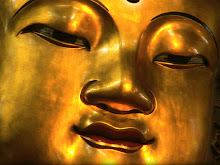
- KTBMovie
- "Lost Secret of Immortality" For thousands of years, science and religion have searched for the key to enlightenment. Killing the Buddha uncovers the sacred knowledge of the Philosopher’s Stone and guides viewers to the mysterious Kundalini – the original enlightened energy of the body. Filmed in China and Tibet, this revolutionary film reveals the secret of practicing sexual yoga to achieve tantric enlightenment. Visit www.killingthebuddhamovie.com for more information about the motion comic and movie.
Showing posts with label death. Show all posts
Showing posts with label death. Show all posts
Friday, July 23, 2010

Wednesday, July 21, 2010
The Fifth Yoga of Naropa: Yoga of Death
The bardo is the after-death state. The idea of bardo yoga is that success in this yoga permits the practitioner to determine their after-death destiny, including the option of being reborn in a particular environment in a human form. Tibetan yoga emphasizes practices that allow the practitioner to prepare himself for the often-terrifying experiences of death. It is believed that if the yogi misses his opportunity for union with the clear light because of fear, he will then experience a nightmare, which will project him into an uncontrolled, possibly negative rebirth unless he can successfully navigate the apparitions, realizing that they are merely mental projections.
The goal of all non-theistic meditation traditions is for the individual to consciously dissolve the indestructible or immortal drop into emptiness, which is also the Spiritual Embryo of Chinese medicine or being returned to the void. The Six Yogas of Naropa represent a number of techniques that can be used to achieve the integration of the three bodies consciously during the death experience. As the physical body drops away, there is a gap of perception, which if consciously observed, results in the union of the sambhogakaya and dharmakaya bodies. One of the major reasons for the practice of dream yoga is that the state of awareness of lucid dreaming, in which the consciousness realizes it is dreaming while dreaming, is considered an important prerequisite for an individual to consciously observe the process of dying without fear and distorted perception.
Half of the Six Yogas are for practitioners who are living, while the other half are for practitioners during the process of death. As the Dalai Lama says, Tibetans believe that at the time of death the only thing one has to rely on is the depth of one’s meditation and spiritual practice.
The goal of all non-theistic meditation traditions is for the individual to consciously dissolve the indestructible or immortal drop into emptiness, which is also the Spiritual Embryo of Chinese medicine or being returned to the void. The Six Yogas of Naropa represent a number of techniques that can be used to achieve the integration of the three bodies consciously during the death experience. As the physical body drops away, there is a gap of perception, which if consciously observed, results in the union of the sambhogakaya and dharmakaya bodies. One of the major reasons for the practice of dream yoga is that the state of awareness of lucid dreaming, in which the consciousness realizes it is dreaming while dreaming, is considered an important prerequisite for an individual to consciously observe the process of dying without fear and distorted perception.
Half of the Six Yogas are for practitioners who are living, while the other half are for practitioners during the process of death. As the Dalai Lama says, Tibetans believe that at the time of death the only thing one has to rely on is the depth of one’s meditation and spiritual practice.
Subscribe to:
Posts (Atom)