About Me

My photo
"Lost Secret of Immortality" For thousands of years, science and religion have searched for the key to enlightenment. Killing the Buddha uncovers the sacred knowledge of the Philosopher’s Stone and guides viewers to the mysterious Kundalini – the original enlightened energy of the body. Filmed in China and Tibet, this revolutionary film reveals the secret of practicing sexual yoga to achieve tantric enlightenment. Visit www.killingthebuddhamovie.com for more information about the motion comic and movie.

Wednesday, October 27, 2010

Christ In Buddha Nature: Two Worlds-One Heart

Father Francis Tiso: Christ In Buddha Nature: Two Worlds-One Heart

Product Image: Father Francis Tiso: Christ In Buddha Nature: Two Worlds-One Heart

Browse the iAmplify library of thousands of Audio & Video titles. Enjoy free samples, choose on-the-go content for your on-the-go lifestyle, and download full titles to your desktop, laptop or any portable media player.

If you have ever struggled with the dilemma of reconciling Buddhist philosophy with Christian theology, you will find yourself quickly absorbed in this rich and informative conversation with Father Francis Tiso, scholar, poet, artist, musician, botanist, alchemist, exorcist, mystic and gourmet cook - a Renaissance man in the truest sense of the term. Responding to the question of how a Catholic priest becomes so involved with Buddhism, Fr. Tiso launches into the story of his calling and the extraordinary unfolding of his lifework. We hear about his travels to Asia to meet Tibetan Buddhist masters; the Tibetan Buddhist phenomenon of the rainbow body and its connection to the resurrection of Christ, and his thoughts on metaphors and symbols. "We have to be aware that culturally we have a lot invested in the term "symbol or metaphor" as a limit feature of phenomenon. When traditional cultures talk about symbols and metaphors they are talking about greater reality. Not only greater in the sense of having more meaning, but representing the way things really are in their depths."

Father Tiso is an ordained Roman Catholic priest of the Diocese of Isernia-Venafro, where he holds the office of Canon in the Cathedral. He is the author of numerous publications, and presently serves as the Parochial Vicar of the parish of Our Lady of Mount Carmel, Mill Valley, CA.

New Dimensions seeks out the most innovative and creative people on the planet and engages them in spontaneous, deep dialogues. Its mission is to deliver life-affirming, socially and spiritually relevant information, practical knowledge and perennial wisdom through the voices and visions of those who are asking new questions and are looking at the world in positive and inspiring ways. It is through the exchange of ideas and information that we can be empowered and enabled to meet the future with greater energy and clarity.

Tuesday, October 26, 2010

Can Sex Lead to Enlightenment?: Tantric and Buddhist Perspectives


Can Sex Lead to Enlightenment?

Tantric and Buddhist Perspectives

Oct 16, 2009 Anita Saran

Tantra, which originated in post-vedic India, may be defined as a form of yoga that teaches the attainment of spiritual ecstasy via esoteric and erotic techniques. One of its goals is to further spiritual evolution through sexual energy.

The practice of tantric sex has been growing in the West. This is often referred to as pop tantra because it is bereft of the other more important aspects of the practice. Many are attempting to attain enlightenment through this ancient practice. But the majority are interested in either enhancing sexual pleasure or creating "spiritual bonds" with their lovers.

Maria P, a writer doing research for her tantric novel, attended a workshop in New York on tantra. She says: "It was interesting that just before the break, one couple piped up to the teacher, 'Is this all we're going to cover? When are we getting to the sex?'

"When the teacher explained that this was more the spiritual aspect, they said, 'Oh, well, no thanks,' and got up and left. Later, when I approached the teacher, she told me she gets a few in every crowd like that. Even though the write up advertising her class tells what will be covered, they always run a 'hot' image with it, so some get the wrong idea."

The Mother of Tantra – Margot Anand

Margot Anand, a disciple of the late Bhagwan Rajneesh (known as Osho), is considered "the mother of tantra." In an interview with What is Enlightenment? magazine, she says that in tantra there is a belief that The Buddha could not have attained enlightenment if he hadn't experienced the transcending bliss of sexual union with his wife. Tantrics claim that The Buddha did not attain enlightenment under the bodhi tree, but in sexual union with his wife.

However, she admires those who become celibate because of a natural tendency, and not because they are repressing their desire. She believes that only after experiencing and indulging in sexual activity is a practitioner ready for celibacy, and mentions how Osho always spoke of Mahatma Gandhi in this regard. Until the very end, says Anand, Gandhi was obsessed with sex and struggled to free himself from it.

Yet it is clear to Anand that celibacy frees people from attachment and jealousy. She says about sex: "If you, once and for all, don't bother with it and remove yourself from it, you probably have a much better chance to focus your energies on spiritual matters."

The Bliss of Celibacy and Sense-Restraint

In 1996, Sister Siripannà, from the Amaravati monastic community in England, conducted a weekend workshop at the Barre Center for Buddhist Studies titled Renunciation: The Highest Happiness.

In a lecture, she explained, “There is a part of us that feels renunciation means to lose everything we love; having to deprive ourselves of what is pleasant and enjoyable in life. . . Renunciation can sound like passivity, a “door-mat” philosophy, but actually it is the opposite.”

She says the practice of sense restraint has given her a "tremendous sense of freedom and relief" and no longer is she "running after the world."

The Buddha on Sensual Pleasures

Sister Siripannà quotes The Buddha on the subject of sensual pleasures, saying, “Whatever bliss in the world is found in sensual pleasures, / and whatever there is of heavenly bliss – / These are not worth one sixteenth part / Of the bliss that comes with craving’s end.”

A Buddhist Monk on Sexual Activity and Enlightenment

Bhante Henepola Gunaratana, a Buddhist monk from Sri Lanka, in a fascinating interview with Simeon Alev for What Is Enlightenment? magazine, says, "And therefore in his gradual teaching, he [The Buddha] said that first there is the pleasure in sexual activities, and then there are the disadvantages, then there are the problems. And only when you see the problems, only then do you begin to realize that these disadvantages, this negativity, are inherent in sexuality – they are intrinsic."

According to Bhante, sexual activity cannot lead to enlightenment. He mentions The Buddha as saying in the Pali Canon that no matter how well one knows the sutras, or how long he lives alone in a desolate cave, if he cannot get rid of his lust, hatred and ignorance, he cannot attain enlightenment.

Bhante adds that sexual indulgence leads to jealousy and confusion. Although he does not condemn "moderate, wise, healthy sexual activity," he says that it is forbidden to those whose aim is enlightenment.

Celibacy Requires Self-Mastery

Spiritual aspirants contend that celibacy requires ability and an attitude of self-mastery which are signs of inner freedom, of responsibility towards oneself and others. They point out that spiritual practitioners have long known the benefits celibacy brings: those of improved concentration and purity.

They explain that just as the body needs food for sustenance, the soul needs purity.

If you enjoyed this article, you may like to read about how meat-eating affects the psyche, and the moral dangers of eating meat – both according to the Buddhist perspective.

Sources:

Copyright Anita Saran. Contact the author to obtain permission for republication.


What do you think about this article?

Comments

Nov 6, 2009 7:46 AM
Guest :
So "sexual indulgence leads to jealousy and confusion". This entirely depends on the context and persons involved.

Jealousy is a painful emotion, but that doesn't make it bad - like all emotions it is an opportunity for one to learn and grow.

1 Comment:
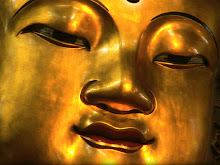
Where "Killing the Buddha" originated

T'ang dynasty Chinese Ch'an monk and founder of the Lin-chi school. He originally came from a family named Hsing in Ts'ao-chou, but left home while still quite young and studied Buddhist teaching and practice in many places with many teachers. He achieved his enlightenment experience and received inka from  Hsi-yün (d. 850), and thereafter made free use of Huang-po's methods of beating students and shouting directly into their ears. Aside from these ‘shock’ techniques, Lin-chi also gained renown for his mastery of the most complex Buddhist thought as contained in the Hua-yen ching, and his ability to teach and illustrate it in plain and straightforward language. In 851 he moved into the Lin-chi Temple in Hopei, from which he took the name by which he is mainly known and which lent its name to the lineage that followed after him. The Lin-chi school thereafter became the most successful and widespread of the five Houses’ of Ch'an, and became the ascendant line of the  Rinzai school of zen in Japan. He is perhaps best known for his dictum, ‘If you meet the Buddha on the road, kill the Buddha’, through which he attempted to turn students' attention away from external images and teachers so that they could discover the truth about themselves.

Friday, October 22, 2010

Breathe right to increase energy

One of the benefits of learning Tai Chi Chuan is increased energy and while learning the art can take months or even years to learn, the effects of learning to breathe correctly can dramatically improve one’s health, in some cases in the very first class.

It is common in so called civilized societies to adapt the habit of chest breathing in adulthood but the jury is still out as to why. Different theories exist, including stress and tension, or for appearance purposes (to have a flat stomach). In any case, chest breathing utilizes only a small fraction of lung space, while breathing correctly not only provides the body with more oxygen, it also provides stimulation to one’s internal organs because the diaphragm muscle gently massages them with each breath.

Relearning to breathe

The diaphragm muscle which lies below the lungs is responsible for moving air in and out of the lungs and it moves vertically. By watching a baby breathe, one can see that their stomachs rise and fall with each breath and this is why in Tai Chi and other martial arts, abdominal breathing is referred to as infant breathing.

Learning or rather, relearning to breathe correctly doesn’t require a formal class; all it requires is practice. In fact, it is customary for Tai Chi instructors to explain correct breathing and to instruct their pupils to practice anytime they think of it so that, over time, correct breathing will become automatic or in other words; one will eventually do it without having to think about it.

Easy practice

Set aside a couple of times each day for concentrated practice and add other times whenever it comes to mind. For example, while lying in bed before falling asleep, place both hands on the lower abdomen, one atop the other, and count ten long, full breathes, feeling the rise and fall of the lower abdomen with each one. Do the same upon rising in the morning, before climbing out of bed.

Mix in other times too; while sitting idly, while driving or riding to work, and any other time it comes to mind. Within two weeks or so, correct breathing will be relearned and will be done without conscious thought. Most people, who relearn to breathe, find an immediate increase in energy simply because of increased oxygen intake and if continued long term, they often gain increased vitality due to renewed energy derived from improved organ function.

Thursday, October 21, 2010

Yoga takes CWG by storm

  2010-10-03 
 
#wrapper { width: 490px; height: auto; padding-top: 20px; }#head-con { width: 490px; height: auto; float: left; }#head-text { width: 400px; height: auto; float: left; }#bottom-text { width: 490px; height: 10px; float: left; padding-top: 5px; padding-bottom: 25px; }.arial12-black-b { font-family: Arial,Helvetica,sans-serif; font-size: 12px; font-weight: bold; color: rgb(0, 0, 0); text-decoration: none; }#add-text { width: 90px; height: auto; float: left; }.arial12-black-bnew { font-family: Arial,Helvetica,sans-serif; font-size: 12px; font-weight: bold; color: rgb(0, 0, 0); text-decoration: none; }a.arial12-black-bnew:hover { font-family: Arial,Helvetica,sans-serif; font-size: 12px; font-weight: bold; color: rgb(0, 0, 0); text-decoration: underline; }.verdana12-black-n { font-family: Verdana,Arial,Helvetica,sans-serif; font-size: 12px; color: rgb(0, 0, 0); text-decoration: none; }.verdana12-black-n1new { font-family: Verdana,Arial,Helvetica,sans-serif; font-size: 12px; color: rgb(0, 0, 0); text-decoration: none; }a.verdana12-black-n1new:hover { font-family: Verdana,Arial,Helvetica,sans-serif; font-size: 12px; color: rgb(0, 0, 0); text-decoration: underline; }.ver10ash-b { font-family: Verdana,Arial,Helvetica,sans-serif; font-size: 10px; font-weight: bold; color: rgb(204, 204, 204); text-decoration: none; }

Jawaharlal Nehru Stadium,XIX Commonwealth Games,Sonia Gandhi,Prime Minister Manmohan Singh,Suresh Kalmadi

New Delhi: Young athletes at the Commonwealth Games opening ceremony enthralled the audience by performing stunning yoga asanas and 'surya namaskar', a series of postures in salutation to the sun.

With body, mind and soul in unison, lean but strong performers in amber light spread across the field at the Jawaharlal Nehru Stadium, depicting 'kundalini' or the coiled energy, an instinctive force that lies at the base of the spine.

Then one of them rose in the 'padma asana' or the lotus pose. The performers choreographed themselves to form 'chakras', the seven energy points of the human body as the 65,000-audience looked in awe.